
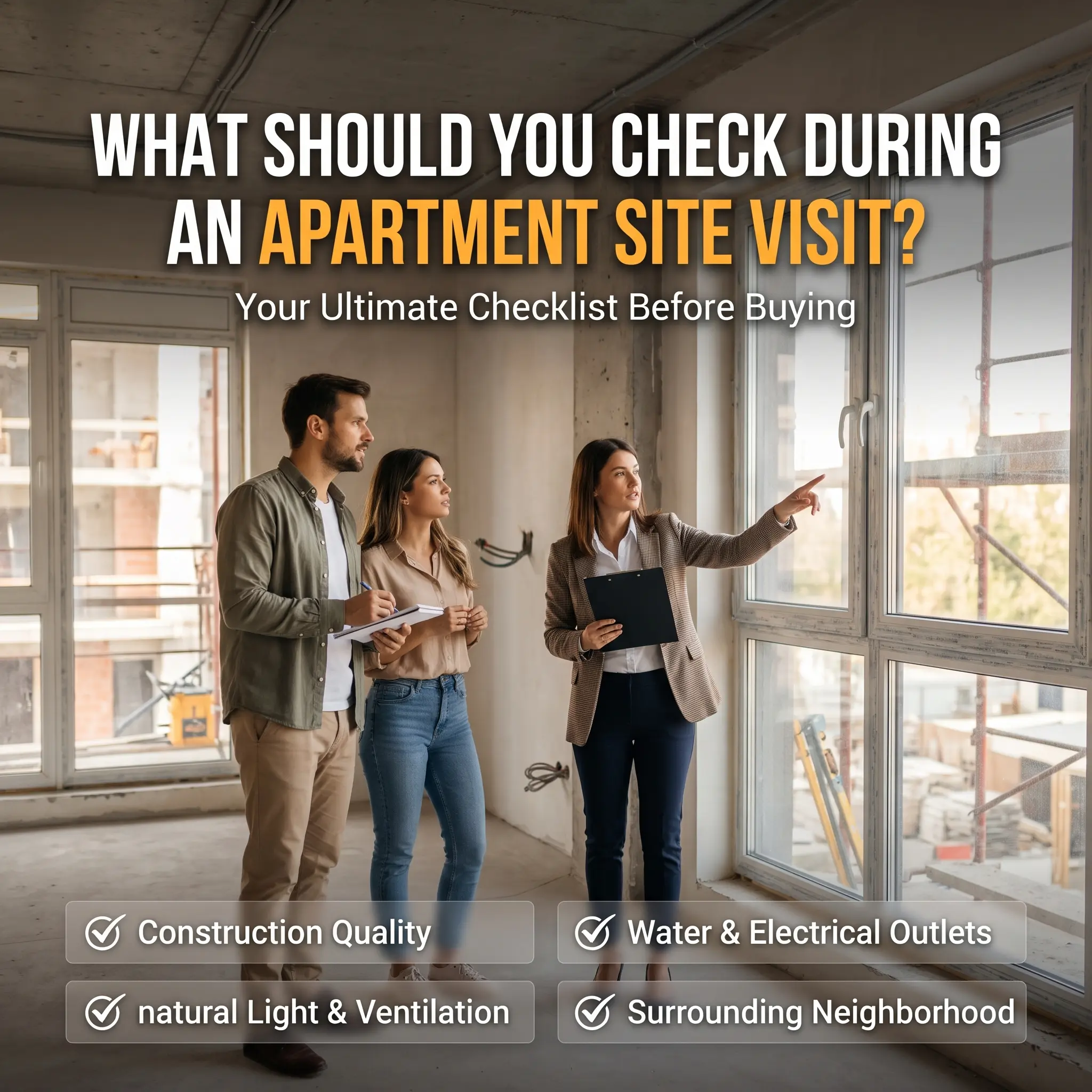
You’ve compared prices, gone through the floor plan and maybe watched the walkthrough video a couple of times. Now it’s time to stand inside the flat and see it with your own eyes.
Site visits tend to be short. Often they’re a little rushed too, with a sales executive walking you around and keeping the conversation moving. So it helps to go in with a plan. This apartment site visit checklist covers what to look at, what to ask, and what to settle before you pay a booking amount.
Ready to move in or still under construction, the aim is the same: make sure what you were promised is what you actually get.
We wrote this at Globes Properties for first-time buyers, and for anyone who has ever walked out of a visit thinking, “Oh no, I forgot to check that.” Use it as it is, or trim it down to what matters to you.
Why the Site Visit Beats the Brochure
Brochures show the flattering angles. 3D renders always have perfect sunlight. Neither will tell you about the damp patch by the window, the loud road behind the building, or the staircase that looked wider on paper.
Visiting in person lets you pick up what photos can’t: sound, smell, daylight, water pressure and the general feel of the place. It’s also your best chance to catch problems while you still have some say. Once the booking amount is paid, asking for changes gets a lot harder.
Get Ready Before You Go
An apartment site visit checklist is only useful if you’ve done a little homework first. Ten minutes of planning saves you from missing things in the moment.
Pack these:
- Your phone, with the torch and camera ready
- A measuring tape
- A phone charger, to test the sockets
- The brochure and floor plan, so you can compare them with what you see
- A notebook or a notes app
- A friend or family member, because a second pair of eyes catches what you miss
Go in daylight if you can. You’ll see the walls, ceilings and light much better. If possible, come back a second time in the evening or on a weekend. A flat can feel completely different when the street is busy and the neighbours are home.
Take photos and short videos of everything. After three or four properties, they start to blur together.
Look Around the Neighbourhood First
Things to check before buying an apartment aren’t limited to the flat itself. You’ll be living in the neighbourhood too, so give it ten minutes before you step inside.
- Access: Is the approach road wide enough? Is it easy to get to at peak hours?
- Daily needs: How far are the nearest schools, hospitals, markets and public transport?
- Noise and smell: Is there a main road, a factory, a construction site or an open drain close by?
- Water logging: Look at the ground around the building, and ask people nearby whether water collects there in the rainy season.
- Parking: Is there enough for the number of flats? Is it covered? Is your slot allotted in writing?
- The outside of the building: Look for cracks, stains, peeling paint or patchy repairs on the exterior walls.
The outside of a building tells you a lot about how it was built and how it’s looked after.
Construction Quality: What to Look For
Construction quality is the hardest thing for most buyers to judge. You don’t need to be an engineer, though. Plenty of warning signs are easy to spot if you slow down. Keep this apartment site visit checklist open on your phone and tick things off as you go. Think of it as your own apartment inspection checklist. A careful apartment quality inspection is mostly patient looking.
Walls and ceilings
Look for cracks and notice whether they’re hairline or wide. Hairline cracks in plaster are common and usually harmless. Wide or diagonal ones deserve a question. Also look for damp patches, stains or bubbling paint, especially near bathrooms, balconies and on the top floor. Those can point to seepage.
Floors
Walk across every room. Tiles should sit evenly, and when you tap them gently there shouldn’t be any loose or hollow-sounding spots. Check the joints and edges. In bathrooms and balconies, the floor should slope slightly toward the drain.
Doors and windows
Open and close every one. They should move smoothly and lock properly. Look for gaps around the frames, rust on metal parts and cracks in the glass. The main door should feel solid.
Balcony and railings
Push the railing firmly. It shouldn’t wobble. And check that water runs off the balcony floor instead of pooling.
Finishing details
Look closely at paint, tile alignment, cupboard fittings and corners. Sloppy finishing on small things often means rushed work on bigger ones.
If the flat is still under construction, ask to see the work in progress, not just the sample flat. The sample flat shows the best version. The actual floor shows the real one.
Inside the Flat: Electrical, Plumbing and Light
This is where you slow down and actually test things. Looking isn’t enough.
Electrical
Switch on every light and fan. Plug your charger into each socket to make sure it works. Look at the distribution board and see whether the circuits are labelled. Count the switch and socket points and compare them with the specification. Check that the AC points are where you’d expect them.
Plumbing
Open every tap and notice the water pressure. Flush each toilet. Run a tap and a shower together and see whether the pressure drops badly. Look under the sinks for leaks or damp stains. Pour a little water on the bathroom floor and watch whether it drains properly.
Ventilation and natural light
Stand in each room and see how much light comes in. Check that the windows let air move through the flat. Bathrooms and kitchens need proper ventilation or exhaust points.
Room sizes
Measure a few rooms and compare them with the floor plan. Will your bed, wardrobe and sofa fit? A room that looks big in a drawing can feel tight in real life.
Kitchen
Look at the platform height, the sink position, the storage and the chimney point. Think about how you actually cook, not how a showroom kitchen looks.
Smell and signal
A musty smell can mean hidden damp. And check your mobile signal inside the flat. It sounds minor until you can’t take a call in your own living room.
Common Areas, Amenities and Safety
You’ll share these spaces with your neighbours every day, so they deserve a proper look.
- Do the lifts work well? Are there enough of them for the number of flats?
- Are there fire exits, extinguishers and clear staircases?
- Is there a security system, like a guard post or CCTV?
- Where does the water come from, and how is it stored?
- Is there power backup for the common areas?
- Are the promised amenities, like the gym, garden or clubhouse, actually built, or only drawn on a plan?
- If families already live in the building or in an earlier phase, how well are the common areas kept?
Walk through the staircase and the lift lobby as well. Poor lighting and untidy corners usually show how a building will age.
What to Check in a New Apartment
What to check in a new apartment is a little different from checking a resale flat. A new flat looks clean and unused, but it often has small unfinished jobs. This is where a careful new property inspection pays off.
Look for paint touch-ups, missing sealant around tiles and sinks, scratches on glass, loose fittings and uneven edges. Write it all down as a list of defects and send it to the builder in writing. Ask for the fixes before you accept possession, not after.
With a resale flat, you’ll want to ask a few more things. How old is the building? When was it last repainted or repaired? Has there been any leakage or structural repair? And why is the owner selling?
Documents and Paperwork to Check
Things to check before booking a flat go beyond what you can see. A good checklist for buying a flat covers the paperwork too, because that’s what protects you once the visit is over.
- Project approvals: Confirm the project is registered with your local real estate regulator and that approvals are in place. In India, for example, that means RERA registration.
- Land title and ownership: Ask to see the title documents and have a lawyer go through them.
- The builder’s track record: If you can, visit a project they’ve already finished and talk to the residents.
- Area details: Learn the difference between carpet area, built-up area and super built-up area, and find out which one the price is based on.
- Agreement terms: Read the payment schedule, the possession date and the penalty clauses carefully.
- Completion or occupancy certificate: For a ready flat, ask whether it has been issued.
- Extra costs: Ask about maintenance charges, parking, registration, club membership and any one-time deposits.
This is a good point to bring in a property lawyer. The fee is small next to the size of the purchase.
Questions to Ask When Buying an Apartment
You won’t remember everything on the spot, so keep these handy. They’re the questions to ask when buying an apartment, whether you’re talking to a builder, an agent or an owner.
- What is the exact possession date, and what happens if it’s delayed?
- What is the total cost, including all charges and taxes?
- Which area is the price calculated on?
- What are the monthly maintenance charges, and what do they cover?
- Is parking included, and is the slot allotted to me?
- Which banks have approved loans for this project?
- Who maintains the building after handover?
- Have there been any complaints, disputes or legal issues with the project?
- What are the specifications for fittings, flooring and electrical work?
- Can I get every verbal promise written into the agreement?
That last one matters most. If it isn’t in writing, treat it as if it was never promised.
Common Mistakes Buyers Make
Even the best apartment site visit checklist can’t save you from a few familiar traps.
- Visiting only once. One visit rarely tells you enough. Go back at a different time of day.
- Listening only to the salesperson. Talk to security guards, residents and shopkeepers nearby.
- Deciding on emotion. A lovely view or a good deal can hide real problems. Sleep on it.
- Ignoring the surroundings. You’ll live in the area, not just in the flat.
- Skipping the agreement. Read every page before you sign, and ask a lawyer to read it too.
- Trusting verbal promises. Get everything in writing.
Apartment Site Visit Checklist at a Glance
Here’s the short version to keep on your phone.
- Surroundings, access, noise, water logging
- Building exterior and common areas
- Walls, ceilings, floors and signs of seepage
- Doors, windows, balcony and railings
- Electrical points, switches and sockets
- Taps, flush, water pressure and drainage
- Natural light, ventilation and room measurements
- Fire safety, lifts, security and parking
- Approvals, title documents and agreement terms
- Every answer in writing
Frequently Asked Questions
What should I check during an apartment visit?
Start with the neighbourhood and the outside of the building. Then move on to construction quality, electrical points, plumbing, light, ventilation and room sizes. Finish with the common areas, safety features and paperwork.
How long should an apartment site visit take?
Set aside at least an hour for a single flat, and more if you want to see the common areas and the neighbourhood too. Rushing is how things get missed.
Can I do an apartment quality inspection myself?
You can spot plenty on your own: cracks, damp, uneven floors, leaks and faulty fittings. For structural worries or legal documents, it’s wise to bring in a qualified engineer or lawyer.
How is checking a new flat different from checking a resale flat?
With a new flat, the focus is on unfinished work and getting a defects list sorted before possession. With a resale flat, you’ll ask more about the building’s age, past repairs, leakage history and the owner’s papers.
When is the best time to visit?
Daytime works best for judging light, cracks and finishing. A second visit in the evening or on a weekend shows you the noise, traffic and crowding.
Is there a different apartment site visit checklist for under-construction flats?
The basics stay the same. On top of them, check how far the construction has progressed, the approved plans, the builder’s track record and the promised possession date. Then compare what you see on site with what the agreement says.
Should I bring someone with me?
Yes. A friend or family member will ask questions you forget and notice things you miss.
Final Thoughts
A good site visit isn’t about finding a perfect flat, because there isn’t one. It’s about knowing exactly what you’re buying and being comfortable with the trade-offs. Take your time, test things properly, get every answer in writing, and don’t let anyone hurry you.
If you’re looking for a home and want guidance you can trust, Globes Properties is here to help. Take this apartment site visit checklist along on your next visit, and get in touch with our team whenever you have questions about a project or its paperwork.
For More Visit : https://globesproperties.com/
Powered by : https://www.mnmreality.com

Join The Discussion